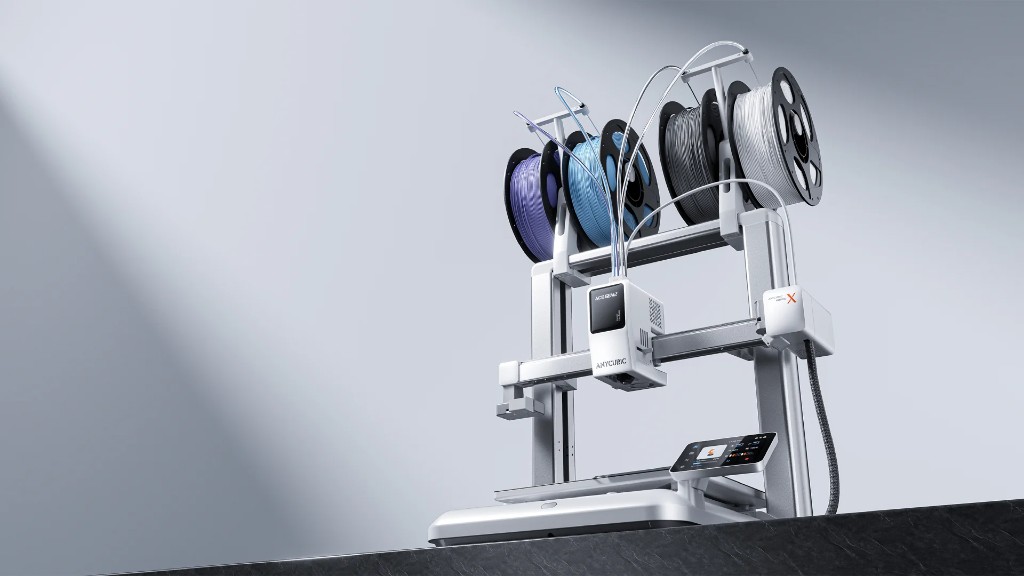
1) Overview & Target Audience
Who is the Kobra X especially suited for?
- Beginners to advanced users who want multicolor without jumping to significantly more expensive systems.
- Makers who print PLA/PETG and flexible materials (depending on setup) and want to try high print speeds.
- Users who find remote/"smart" features interesting (manufacturer mentions remote printing and AI detection, among other things).
Who might it disappoint?
- Those expecting maximum reliability without tuning.
- Those who print a lot of ASA/ABS: Open frame + warping risk → more sensible with enclosure/controlled environment.
2) Technical Specs & Features (Key Points)
Build Volume
Current sources cite 260 × 260 × 260 mm. (Note: Some older Kobra models/names can cause confusion – hence the current Kobra X figure from recent sources.)
Speed & Acceleration
According to Anycubic FAQ for the Kobra X:
- Recommended: 300 mm/s
- Maximum: 600 mm/s
- Recommended acceleration: 10,000 mm/s², max. 20,000 mm/s²
That puts it in the "high-speed" class – in practice, results depend heavily on filament, model geometry and slicer profiles.
Extruder / Hotend / Filaments
A current review states:
- Direct Drive
- 0.4 mm nozzle (hardened steel)
- Material support including PLA/PETG/TPU/PVA as well as CF filaments (model/setup dependent) and hotend up to 300 °C (per review table).
Print Bed
Anycubic documentation/shop states up to ~100 °C or in the EU shop 110 °C max (shop details may vary by region/revision).
Auto-Leveling / First Layer
Anycubic promotes "Perfect First Layer" and the Kobra line is known for LeviQ auto-leveling (25-point documented on other Kobra models; Kobra X also has auto-leveling).
Multicolor / Multi-Material
- Standard: 4-colour
- Expandable to 19-colour (with multiple units/"ACE 2 Pro" per FAQ).
That's a strong selling point – at the same time, multicolor systems almost always mean: more complexity, more potential failure points (feed/filament change), more material waste from purge/change (even if Anycubic promotes "Material Savings").
3) Assembly & Setup (Typical Process)
For open bed-slinger printers in this class, setup is usually:
- Check mechanics: Wheels/eccentrics not too loose or tight, belts tensioned but not over-tight.
- Z-axis: Straight guides, no binding, lead screw clean and smooth.
- Auto-leveling + Z-offset: Calibrate first layer (extremely important for high-speed).
- Slicer profile: Start conservative (e.g. 150–200 mm/s) and increase gradually.
If you want to run 300–600 mm/s right away, that's realistically only achievable with speed-optimised profiles, good filament and suitable models.
4) Print Quality in Real-World Testing (What to Expect)
PLA / PETG
PLA: The Kobra X should handle it very well, especially for decorative items, multicolor models and maker parts.
PETG: Usually good too, but needs clean temperature/retract settings (stringing).
TPU (Flex)
With Direct Drive, TPU is generally possible, but with multicolor/feed systems TPU can be trickier depending on the setup. The review lists TPU as a supported material.
Ghosting/Ringing & Vibrations (Typical High-Speed Limits)
At high speeds, ghosting (echo at edges) is a classic issue. Anycubic itself attributes ghosting to excessive speed/vibrations.
In practice: For "pretty" prints you'll often print slower than the max marketing suggests – or you optimise (input shaping/resonance, stable placement, slicer tuning).
Z-Banding / Z-Wobble (Typical for Bed-Slingers)
Mechanics and maintenance are crucial. Z-banding is often influenced by Z-wobble/mechanics/extrusion.
5) Multicolor Printing (Strengths & Typical Pitfalls)
Strengths
- 4 colours out of the box is a real highlight in the budget segment.
- Creative applications: logos, figures, signs, functional parts with colour marking, support material (PVA, depending on profile/experience).
Typical Pitfalls
- Purge/Waste: Multi-colour layer changes often produce a lot of "waste filament". Anycubic promotes savings, but in practice it depends heavily on the model.
- Feed & spool management: Clean filament path, even spool friction, dry filament.
- Profile quality: Multicolor usually requires more fine-tuning than single-colour.
6) Software / Ecosystem / Firmware
Anycubic mentions "Kobra OS" in the EU shop description. Reviews also mention "intelligent/remote printing" and "AI detection" as part of the feature set.
Important in daily use:
- Check whether you prefer working locally (SD/USB) or want cloud/remote.
- Watch for profile updates: especially with new multicolor platforms, manufacturers often improve slicer profiles and firmware details in the first few months.
7) Noise, Stability, Footprint
Without own measurements: High-speed bed-slingers tend to be audible at speed (vibrations), and benefit greatly from a stable base (heavy plate/stone, anti-vibration feet).
Footprint: Open frame + filament feed/multicolor unit(s) need more space around them in practice than the pure footprint suggests.
8) Maintenance & Reliability (Practical Checklist)
- Belts: Check regularly (ghosting/layer shift risk).
- V-wheels/Eccentrics: Even tension, no play.
- Z-lead screw: Keep clean, lubricate occasionally (Anycubic recommends regular Z maintenance on other models; as a rule of thumb: when noise/instability occurs).
- Nozzle: Multicolor + CF filaments → take nozzle/hotend care seriously (hardened steel helps).
9) Pros & Cons
✅ Pros
- Multicolor (4→19) as a unique selling point in this price range.
- High-speed specs up to 600 mm/s (with corresponding limits in practice).
- Direct Drive, hardened 0.4 mm nozzle (per review).
- Auto-leveling/first-layer focus ("Perfect First Layer").
❌ Cons
- Multicolor = more complexity (purge, feed, profiles).
- High speed can increase ghosting → needs setup/tuning.
- Open design: Less ideal for ASA/ABS without enclosure (warping).
10) Purchase Recommendation
Buy if…
- you want multicolor and are willing to learn the ropes,
- you mainly print PLA/PETG,
- you like printing fast and accept fine-tuning.
Consider alternatives if…
- you expect maximum "out-of-the-box" perfection,
- you want to print a lot of ABS/ASA at high quality without an enclosure,
- you need very large parts (260³ may be too small for some projects).